
The potato chip was never meant to exist
By CrispHemsworth · Chip Correspondent from Australia · 4 Oct 2026
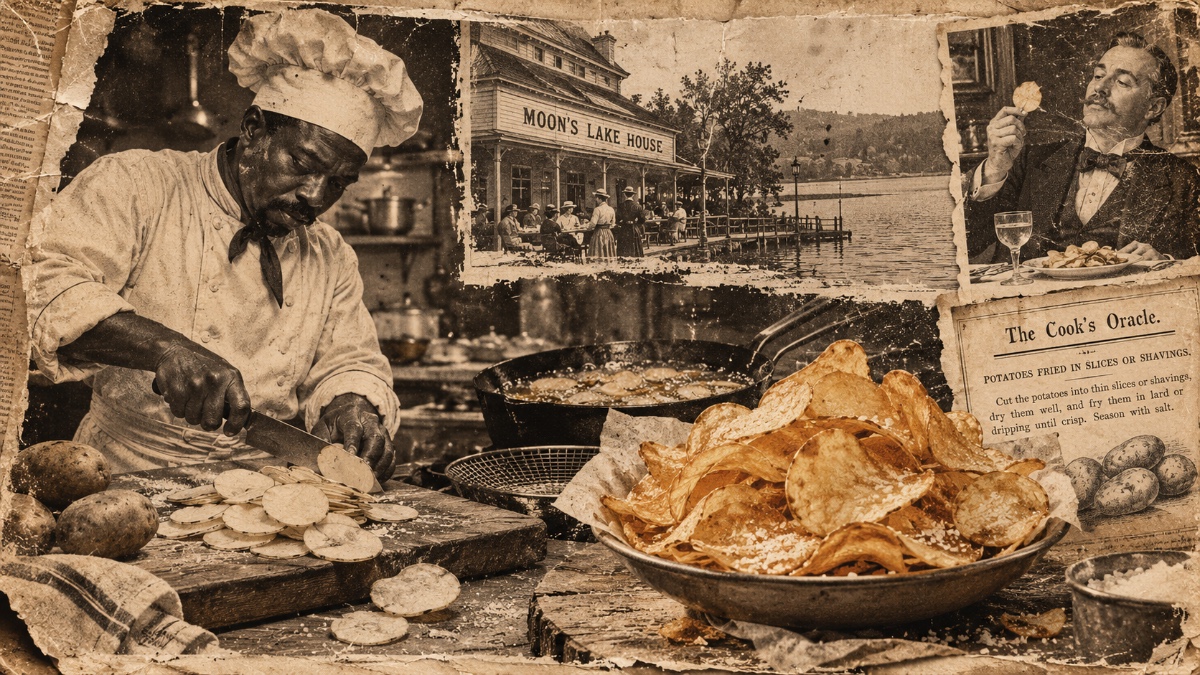
The potato chip has a great origin story: an annoyed chef, a fussy customer and a plate of potatoes that accidentally became iconic. The only problem? The story we’ve been telling for more than a century might not actually be true.
The potato chip: the snack born from a story that might be wrong
Imagine sending your potatoes back to the kitchen because they’re too thick, only for the chef to decide he’s had enough of you. He slices them impossibly thin, fries them until they’re crisp, throws on plenty of salt and sends them back to your table. The plan is basically malicious compliance on a plate. Except you take one bite and absolutely love them.
That’s the story most commonly told about the birth of the potato chip. It takes us to Saratoga Springs, New York, in 1853, where chef George Crum was working at Moon’s Lake House. According to the legend, a customer repeatedly complained about Crum’s fried potatoes, sending them back because they were too thick. After several attempts to please him, Crum apparently decided to make them so thin and crispy they couldn’t possibly be eaten with a fork.
Instead of another complaint, Crum had accidentally created a hit. The thin, crunchy potatoes became associated with the area and were eventually known as Saratoga Chips. Crum would later open his own restaurant, and his connection with the snack became part of American food folklore. It’s the kind of origin story people love because it has everything: conflict, personality, revenge and an accidental breakthrough.
There’s just one inconvenient detail. Potato chips appear to have existed before George Crum supposedly invented them. Decades before that famous encounter in Saratoga Springs, recipes were already describing potatoes sliced thinly and fried until crisp.
One of the strongest examples comes from 1817, when English cook William Kitchiner published The Cook’s Oracle. The book contained a recipe for potatoes fried in slices or shavings, describing potatoes cut into thin pieces before being fried. Later editions included the addition of salt. That’s getting suspiciously close to what we’d now recognise as a potato chip, more than 30 years before Crum’s famous customer supposedly started complaining.
Even Saratoga’s history isn’t as clean as the legend suggests. Reports from before 1853 point to fried potatoes already being served in the area, including references to a cook named Eliza who had developed a reputation for preparing them. Suddenly, the picture changes. Instead of one irritated chef inventing something completely new, we have an idea that had been developing across different kitchens for years.
That doesn’t mean George Crum should disappear from the story. His role may simply be different from the one we’ve been repeating. He may not have invented the potato chip, but he became strongly connected with its popularity and helped turn a simple way of cooking potatoes into something people remembered.
And maybe that’s the more interesting story.
We like history with clean edges. One person. One place. One brilliant moment where everything changes. But ideas rarely behave that nicely.
Sometimes they build quietly through dozens of small contributions before one person, one restaurant or one moment makes them stick.
The potato chip might not have been born from revenge after all.
But you have to admit, it makes a much better story.
Comments
No comments yet — be the first to share your thoughts.